

Today we’re diving into a powerful training on one of the most essential nutrients for chronic infections like Epstein-Barr Virus (EBV): Vitamin C.
This isn’t your typical “vitamin C is good for your immune system” conversation. We’ll explore:
- Why vitamin C is a critical therapeutic tool for EBV
- The pros and cons of Vitamin C IV therapy
- The role of vitamin C in adrenal support, mitochondrial function, and brain health
- When and how to supplement
- Cautions, myths, and a few little-known insights
Let’s jump in!
IV Vitamin C Therapy for EBV
Let’s start with one of the most common questions I get: Is intravenous (IV) vitamin C helpful for EBV?
The answer is yes—but with important caveats.
Pros:
- Well-established in the literature, especially through the work of Dr. Frederick Klenner (Saul, 2007).
- Reduces viral activity and can shorten the length of infections.
- Dosages range from 10g to 50g (grams—not milligrams!) depending on the practitioner.
- Many patients feel immediate relief and symptom improvement.
Here is an example of a study on the effectiveness of IV vitamin C therapy in EBV. The study analyzed patients between 1997 and 2006 with active elevated EBV-EA IgG antibodies or EBV- VCA IgM antibodies and a diagnosis of Chronic Fatigue Syndrome, Mono, fatigue, or EBV infection who were put on high dose (7.5 grams to 50 grams) intravenous vitamin C. The therapy decreased the disease duration and EBV antibodies EA IgG and VCA IgM (Mikirova et al., 2014).
Cons:
- Effects are short-lived—you may need these every few days.
- Not sustainable long-term unless you have easy access.
- Doesn’t address underlying nutrient depletion, immune imbalances, and root causes of EBV. You will still not understand why and when you reactivate and will be dependent on a clinic that provides this therapy. It is not a long term sustainable solution.
- Not everyone can tolerate it. Here’s why:
There is a genetic enzyme deficiency called G6PD (Glucose-6-Phosphate Dehydrogenase Deficiency). People with this condition can suffer red blood cell breakdown when given high-dose IV vitamin C—potentially leading to severe anemia from the damage to red blood cells.
Who is at risk:
G6PD deficiency is more common in individuals of African, African American, or Mediterranean descent. If you’re considering IV vitamin C, your provider must test you for G6PD before starting the treatment.
Beyond the IV: Why Vitamin C is Vital for EBV Recovery
Vitamin C has many roles, but in the context of EBV, it becomes foundational.
1. Vitamin C Reduces EBV Antibodies
Studies show an inverse correlation between vitamin C levels in plasma and EBV antibody titers (Mikirova et al., 2014). The more vitamin C = the fewer antibodies.
2. Supports Interferon Gamma Production
Vitamin C helps produce interferon gamma, a key antiviral compound (Geber et al., 1975).
Interferon gamma prevents viral infections from spreading—especially critical in the brain and central nervous system (Chesler et al., 2002). Note: here are other important nutrients that support interferon gamma:
- Zinc (see our training on zinc)
- Licorice (see our training on licorice)
3. Vitamin C Fuels Mitochondria = Fuels Energy
EBV causes fatigue by damaging the mitochondria in COmplex III and COmplex IV—your cells’ energy factories.
Vitamin C is part of the electron transport chain, needed to produce energy at a cellular level.
Without it, your cells can’t generate energy, leading to:
- Chronic fatigue
- Muscle weakness
- Cognitive issues
4. Vitamin C Is Essential for Adrenal Function
The adrenal glands (your stress-response organs) contain the highest concentration of vitamin C in the body.
Why this matters:
- Chronic EBV is often triggered and maintained by chronic stress
- Stress rapidly depletes vitamin C
- Replenishing Vitamin C is critical for restoring adrenal resilience
5. Vitamin C Maintains Cell Membrane Integrity
Your cell membrane is your body’s first line of defense.
It decides what comes in (nutrients) and what stays out (pathogens and toxins).
Vitamin C (along with omega-3s) maintains membrane strength and protects your cells from oxidative damage.
6. Vitamin C Reduces NF-kappa B Activity and thus Inflammation
Vitamin C lowers NF-kappa B, an inflammatory protein that EBV hijacks to replicate itself (Flavin, 2006).
For example, a study on fast food showed that a typical breakfast increased NF-kappa B by 150%—and that inflammatory window lasted two hours.
Now imagine the impact of eating daily at fast food restaurants on someone with EBV.
Vitamin C helps reduce that replication opportunity.
The Vitamin C Deficiency Epidemic
You may think vitamin C deficiency is rare, but research shows otherwise:
- A 2001–2002 U.S. survey found 31% of Americans didn’t even meet basic vitamin C intake levels (ARS, 2005).
- That was 20+ years ago. Today, the number is likely closer to 60-70%.
- Why?
- Soil depletion
- Food processing
- Microwaving, which destroys vitamin C
- Lower levels in fruits and vegetables than decades ago
- Soil depletion
Reviews of multiple studies also show that organic soil produces a higher level of Vitamin C in produce (Crinnion, 2010).
And remember: we humans don’t make vitamin C.
Therefore, we must consume it—ideally from food, but in chronic EBV, food alone may not be enough.
How to Supplement Vitamin C Safely
Best practices:
- Look for 500–1,000mg capsules
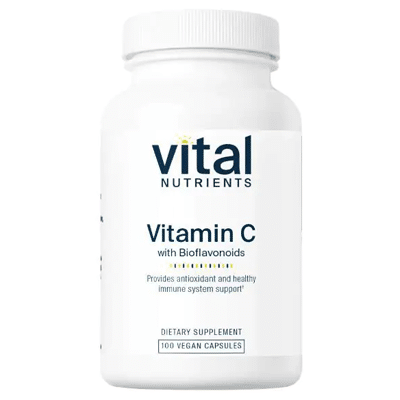
- Choose vitamin C with bioflavonoids – they enhance absorption and extend activity rather than ester buffered Vitamin C.
- Divide your dose throughout the day for better absorption (e.g. 500mg 2–3x/day)
- Take your Vitamin C with meals.
Pro tip:
Put the bottle on your dinner table, so you see it every time you sit down to a meal. This way you will remember to ake a capsule with every meal or snack.
Vitamin C Alert:
- Vitamin C enhances iron absorption, so people with hemochromatosis should avoid Vitamin C or discuss how to safely supplement it with their physician.
- Vitamin C increases absorption of aluminum from medications that contain it, which can be harmful especially with already existing kidney disease.
- Discuss Vitamin C use with your oncologist if you are undergoing chemotherapy.
What About “Vitamin C to Bowel Tolerance”?
Some people experiment with high doses (20–40g) until they reach loose stools (a method known as “bowel tolerance”). I do not recommend this without medical supervision.
Why?
- It’s not sustainable
- If you suddenly stop, you can even develop scurvy!
- It’s hard on your system and creates unnecessary risks
Modern-Day Scurvy?
Scurvy was once a sailor’s disease, caused by long periods without fresh produce.
It led to:
- Bleeding gums
- Loose teeth
- Delirium
- Death
But today, cases of scurvy are being reported in U.S. college students.
That’s terrifying—and proof that we’re deeply depleted as a population.
Food Sources (Still Helpful!)
Even though we focus on supplementation, don’t ignore food:
Great vitamin C sources:
- Red bell peppers
- Broccoli
- Potatoes (yes!)
- Strawberries and other berries
- Leafy greens
- Citrus fruits, including kiwi
Remember: the less processed, the more vitamin C remains.
Final Thoughts
If you are recovering from chronic EBV, vitamin C is not optional—it’s foundational.
- It supports your adrenals
- Repairs your cellular structure
- Fights viral replication
- Reduces inflammation
- Fuels your energy at the mitochondrial level
Please consult your practitioner before starting IV or high-dose therapy. But do consider how you might incorporate daily, consistent vitamin C support—especially during times of stress, illness, or healing.
You can purchase the Vitamin C that I recommend to our EBV Recovery Program students and the one I take myself daily here in our Supplement Shop. It is in our EBV Ultimate Bundle. Use code EBVHeroes10 for 10% off always!
If you have difficulty absorbing supplements in pill form, you may find the isotonix delivery of Vitamin C much more effective.
An excellent comprehensive and in-depth profile of Vitamin C, if you would like to learn more, is on Linus Pauling website.
I hope this training inspired you to take another look at vitamin C—not just as a cold remedy, but as a healing ally in your EBV recovery.
Watch Our Free Training on Vitamin C Supplementation

Disclaimer
This information is for educational purposes only and is not to treat or diagnose any disease. Do not discontinue any medication to use vitamin C.
Any supplement can cause reactions. In that case stop immediately. The side-effects and counter-indications listed are not all inclusive, so do not start any supplement until you talk to your doctor or your pharmacist.
References:


Leave A Comment