

The EBV-Autoimmunity Link: More Than Coincidence
I’m really excited to share with you what I’ve learned about Epstein-Barr Virus (EBV) and its connection to autoimmune disease. Over the last few decades, research has moved this idea from speculation to undeniable science: EBV can trigger or exacerbate a wide range of autoimmune conditions.
Unfortunately, this connection is often missed in clinical practice, leaving patients frustrated when their health struggles remain unexplained. In my years of working with the EBV community, I’ve seen firsthand how understanding this connection can transform health outcomes.
One of the most critical studies in this field was conducted by Dr. John B. Harley and his team in 2018. They showed that EBV’s protein, EBNA2, interacts directly with our DNA to activate genes linked to autoimmune disease. In other words, EBV doesn’t just correlate with autoimmunity—it can help cause it (Harley et al., 2018).
How EBNA2 Works
- EBNA2 recruits human transcription factors, proteins that control gene expression.
- Together, these proteins bind to the EBV genome and the host genome.
- This interaction turns on genes associated with autoimmune risk.
Dr. Harley’s study connected EBV to seven major autoimmune conditions:
- Celiac Disease
- Type 1 Diabetes
- Rheumatoid Arthritis (RA)
- Juvenile Idiopathic Arthritis
- Systemic Lupus Erythematosus (SLE)
- Multiple Sclerosis (MS)
- Inflammatory Bowel Disease (IBD) (Harley et al., 2018).
I have to admit, a few of these surprised me—especially Celiac Disease and IBD. While working on my book, I almost didn’t check IBD, thinking there’d be no link. Yet, studies suggest that up to 60% of Crohn’s and Ulcerative Colitis cases may have EBV as an initial trigger. Lupus, MS, RA—these are classic presentations, and the research is growing stronger every year.
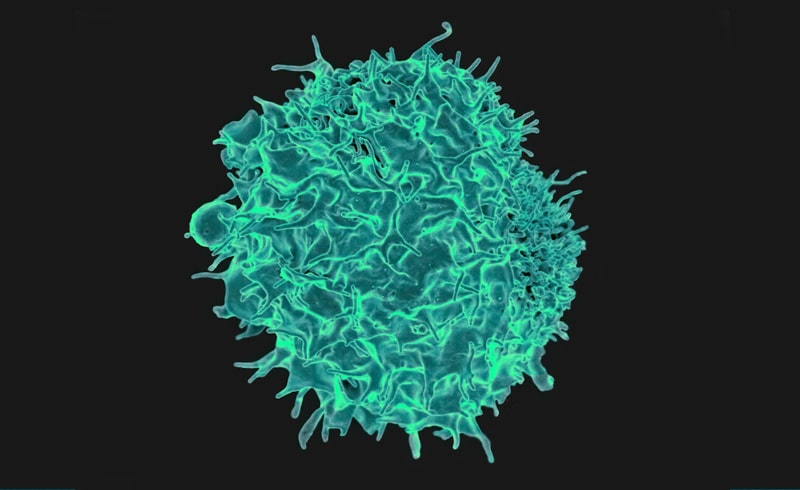
T lymphocyte (T Cell)
CD8+ T Cells, EBV, and Vitamin D: A Perfect Storm for Autoimmunity
Another layer of this puzzle comes from Dr. Michael Pender’s 2012 hypothesis. He proposed that CD8+ T cell deficiency may allow EBV to persist in the body, setting the stage for autoimmune disease (Pender, 2012).
Key Points:
- CD8+ T cells are supposed to detect and destroy EBV-infected cells.
- In autoimmune-prone individuals, these cells may be deficient or malfunctioning, allowing the virus to linger.
- EBV can turn off apoptosis in infected cells—the natural self-destruction mechanism—so these cells can survive indefinitely.
- Add vitamin D deficiency to the mix, and you have a “perfect storm” for autoimmune flare-ups.
From my perspective, this explains why EBV seems to show up in so many different autoimmune conditions and why correcting vitamin D deficiency can sometimes dramatically improve outcomes.
EBV and Citrullination: How a Virus May Trigger Rheumatoid Arthritis (RA)
One of EBV’s most fascinating mechanisms is citrullination, a process especially relevant in rheumatoid arthritis (Vojdani, 2017).
What is Citrullination?
- It’s when the amino acid arginine is converted into citrulline.
- This seemingly small change can alter protein structure, revealing new immune targets that the body may attack.
EBV is the only known virus capable of triggering citrullination. In RA patients, an EBV-derived citrullinated peptide called VCP2 triggers antibodies in 66% of cases, while fewer than 3% of healthy individuals show these antibodies (Pratesi et al., 2011; Cytoskeleton News, 2014).
This makes EBV-induced citrullination a strong candidate as a root cause of RA, and possibly other autoimmune diseases.
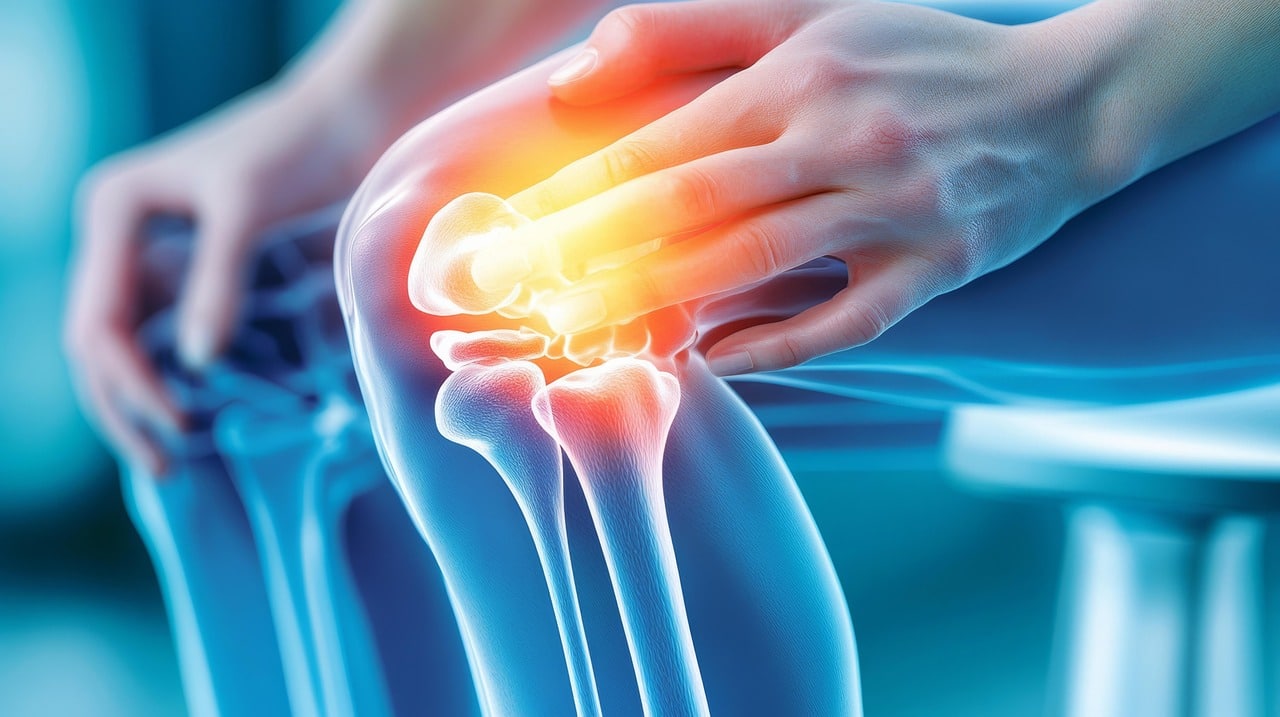
Autoimmune Conditions Strongly Linked to EBV
If you have a rare autoimmune condition, don’t assume there’s no EBV connection. Searching PubMed often reveals surprising links. Over the years, I’ve seen patients with all kinds of autoimmune conditions, many of which are confirmed in the scientific literature as linked to EBV. Here’s a list of some of the most well-researched EBV-associated autoimmune disorders:
Thyroid Autoimmune Disorders (Eligio et al., 2010; Janegova et al., 2015; Sanyal, 2014)
- Hashimoto’s Thyroiditis
- Graves’ Disease
- Many women with thyroid dysfunction are misdiagnosed with hypothyroidism when the root cause is autoimmune in nature. EBV often plays a major role, sometimes alongside H. pylori infection, Blastocystis hominis, or gluten sensitivity. If these triggers aren’t evaluated, therapy may fail.
Chronic Fatigue Syndrome (Wong et al., 1991; Ruiz-Pablos et al., 2021)
- EBV can create chronic mononucleosis syndrome, which mirrors CFS almost exactly. Many people diagnosed with CFS may actually have lingering EBV infection.
Sjogren’s Syndrome (Fox et al., 1992)
- EBV infects salivary glands, explaining the dry mouth and eye symptoms common in Sjogren’s.
Autoimmune Hepatitis, Mixed Connective Tissue Disorder, and CIDP (Dittfeld et al., 2016; Kang et al., 2009; Ngou et al., 1992; Lünemann et al., 2010)
- EBV may interact with other infections or immune dysregulation to drive these conditions.
Scleroderma, Atherosclerosis, Glomerulonephritis (Bilgin et al., 2015; Farina et al., 2017; Bakken, 1980; Subat-Dezulovic et al., 2010)
- Emerging research links EBV to both classic autoimmune tissue damage and vascular/organ-specific conditions.
Psoriasis (Certain Subtypes), Guillain-Barré Syndrome, ITP, Polymyositis, Dermatomyositis, Polyneuropathy (Jiyad et al., 2015; Loh et al., 2012; Kim et al., 2016; Glaser et al., 1979; Hsiao, 2000; Steeper et al., 1989; Chen et al., 2010; Hottenrott et al., 2013)
- While less widely discussed, EBV shows up consistently in studies on these disorders.
The Biggest Mistake in Treating Autoimmune Disease
Many integrative and functional medicine approaches focus on managing symptoms: elimination diets like AIP, anti-inflammatory supplements, detox protocols, and gut-healing strategies.
While these interventions can help, they often miss the root cause.
After 20 years in clinical nutrition and working with thousands of patients, I firmly believe that addressing EBV directly is one of the most overlooked steps in reversing autoimmune disease. Groundwork for EBV—rather than overly restrictive diets—is often what patients need to regain health and food tolerance.
What You Can Do Next
If you or someone you love is struggling with an autoimmune condition, here are the steps I recommend:
- Test for EBV
- Make sure your test includes four antibodies, not just the standard three.
- Direct-to-consumer labs can provide fast results, even without a doctor’s order: Ulta Lab Tests – EBV Panel.
- Interpret Labs Carefully
- EBV IgG doesn’t just indicate past infection, and IgM isn’t always current infection.
- I’ve created free resources, including a 50-minute video training, to help you understand your results: EBV Lab Training.
- Ask Why EBV Became Chronic
- Chronic EBV is rarely accidental. Understanding the triggers is key to long-term recovery.
Final Thoughts: Taking Control of Autoimmunity
Understanding EBV’s role in autoimmune disease can feel overwhelming, but knowledge is power. I want you to feel empowered, informed, and proactive.
Ask yourself:
- Have I ever had mononucleosis or prolonged viral illness?
- Is my vitamin D level adequate?
- Have viral triggers been explored as part of my autoimmune journey?
By asking these questions and testing for EBV properly, you can start to uncover the root causes of your health challenges instead of just treating symptoms.
Autoimmune disease is complex, but EBV is one piece of the puzzle that’s often overlooked. Addressing it directly may be the key to reclaiming your health.
Watch Our Free Training on EBV and Autoimmunity
Resources
- EBV and Multiple Sclerosis Study
- Hashimoto’s Thyroiditis Clinical Article
- EBV Lab Testing Guide
- My book The EBV Solution
References:
Bakken, J. S. (1980). [Epstein-Barr-virus induced glomerulonephritis]. Tidsskrift for den Norske Laegeforening, 100(10), 558–560.
Bilgin, H., Kocabas, H., & Kesli, R. (2015). The prevalence of infectious agents in patients with systemic sclerosis. Turkish Journal of Medical Sciences, 45(6), 1192–1197.
Chen, D. Y., et al. (2010). Polymyositis/dermatomyositis and nasopharyngeal carcinoma: The Epstein-Barr virus connection? Journal of Clinical Virology, 49(4), 290–295.
Cytoskeleton News. (2014). Citrullination: Taking the charge out of Arg.
Dittfeld, A., et al. (2016). A possible link between the Epstein-Barr virus infection and autoimmune thyroid disorders. Central European Journal of Immunology, 41(3), 297–301.
Eligio, P., Delia, R., & Valeria, G. (2010). EBV chronic infections. Mediterranean Journal of Hematology and Infectious Diseases, 2(1), e2010022.
Farina, A., et al. (2017). Epstein-Barr virus lytic infection promotes activation of Toll-like receptor 8 innate immune response in systemic sclerosis monocytes. Arthritis Research & Therapy, 19(1), 39.
Fox, R. I., et al. (1992). Potential role of Epstein-Barr virus in Sjogren’s syndrome and rheumatoid arthritis. Journal of Rheumatology Supplement, 32, 18–24.
Glaser, R., et al. (1979). Guillain-Barre syndrome associated with Epstein-Barr virus in a cytomegalovirus-negative patient. Developmental Medicine and Child Neurology, 21(6), 787–790.
Harley, J. B., et al. (2018). Transcription factors operate across disease loci, with EBNA2 implicated in autoimmunity. Nature Genetics.
Hsiao, C. C. (2000). Epstein-Barr virus associated with immune thrombocytopenic purpura in childhood: A retrospective study. Journal of Paediatrics and Child Health, 36(5), 445–448.
Hottenrott, T., et al. (2013). Primary Epstein-Barr virus infection with polyradiculitis: a case report. BMC Neurology, 13, 96.
Janegova, A., et al. (2015). The role of Epstein-Barr virus infection in the development of autoimmune thyroid diseases. Endokrynologia Polska, 66(2), 132–136.
Jiyad, Z., et al. (2015). Generalized pustular psoriasis associated with Epstein-Barr virus. Clinical and Experimental Dermatology, 40(2), 146–148.
Kang, M. J., et al. (2009). Infectious mononucleosis hepatitis in young adults: Two case reports. Korean Journal of Internal Medicine, 24(4), 381–387.
Kim, S. Y., et al. (2016). Mild form of Guillain-Barre syndrome in a patient with primary Epstein-Barr virus infection. Korean Journal of Internal Medicine, 31(6), 1191–1193.
Loh, E., et al. (2012). Acute guttate psoriasis in a 15-year-old girl with Epstein-Barr virus infection. Archives of Dermatology, 148(5), 658–659.
Lünemann, J. D., et al. (2010). Dysregulated Epstein-Barr virus infection in patients with CIDP. Journal of Neuroimmunology, 218(1–2), 107–111.
Ngou, J., et al. (1992). Antibodies against polypeptides of purified Epstein-Barr virus in sera from patients with connective tissue diseases. Journal of Autoimmunity, 5(2), 243–249.
Pender, M. P. (2012). CD8+ T-cell deficiency, Epstein-Barr virus infection, vitamin D deficiency, and steps to autoimmunity: A unifying hypothesis. Autoimmune Diseases, 2012, 189096.
Pratesi, F., et al. (2011). Antibodies to a new viral citrullinated peptide, VCP2: Fine specificity and correlation with anti-cyclic citrullinated peptide (CCP) and anti-VCP1 antibodies. Clinical and Experimental Immunology, 164(3), 337–345.
Ruiz-Pablos, E., et al. (2021). Epstein-Barr virus and the origin of Myalgic Encephalomyelitis or Chronic Fatigue Syndrome. Journal of Translational Medicine, 19, 331.
Sanyal, D. (2014). Spectrum of Hashimoto’s thyroiditis: Clinical, biochemical & cytomorphologic profile. Indian Journal of Medical Research, 140(6), 710–712.
Steeper, T. A., et al. (1989). Severe thrombocytopenia in Epstein-Barr virus-induced mononucleosis. Western Journal of Medicine, 150(2), 170–173.
Subat-Dezulovic, M., et al. (2010). Postinfectious glomerulonephritis and Epstein-Barr virus co-infection. Collegium Antropologicum, 34(Suppl 2), 229–232.
Vojdani, A. (2017). EBV, citrullination, autoimmunity, vaccination and cross-reactivity to foods. In K. Kines (Ed.), Autoimmune Research.
Wong, R., et al. (1991). Serologic and virologic epidemiology of Epstein-Barr virus: Relevance to chronic fatigue syndrome. Clinical Infectious Diseases, 13(Supplement_1), S19–S27.


Leave A Comment